

 Feed back
 Privacy Policy
The global halal food market is projected to reach $2.6 trillion by 2025 (Thomson Reuters), while kosher-certified products account for over $24 billion in annual US sales (Lubicom Marketing Consulting). This staggering economic impact underscores why food certification has become the cornerstone of religious food compliance. For observant Muslims and Jews, these certifications aren't mere labels - they're sacred covenants between producers and consumers that transcend geographical boundaries.

The American halal food sector grew 15% annually since 2016 (IFANCA), yet faces unique certification challenges. Unlike USDA's centralized organic standards, halal certification involves 87 different US entities with varying standards. Major corporations like Cargill now employ full-time halal compliance officers, while startups like Zabihah (the "Yelp for halal") verify certifications through crowd-sourced reviews. This decentralized system creates both opportunities for cultural adaptation and risks of certification shopping.
Contrasting with the US model, France's 2021 Halal Governance Act established mandatory accreditation for certifiers. The French halal market's 23% growth (Statista 2022) correlates with this regulatory framework. However, the law's requirement for government-trained Muslim auditors sparked debates about secularism - demonstrating how religious food labels intersect with national identity politics.
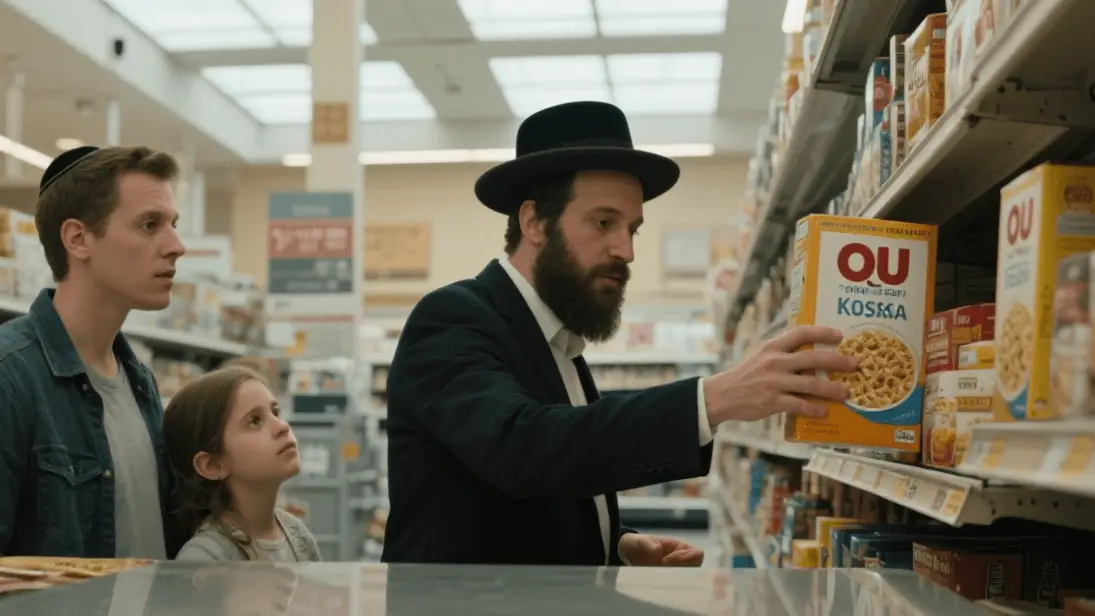
Modern kosher certification involves molecular spectroscopy to detect trace pork residues (OU Kashrus Division). Over 1,200 specialty kosher agencies now exist globally, with the Orthodox Union certifying 1.2 million products. This scientific rigor explains why 41% of kosher consumers purchase for food safety reasons rather than religious observance (Mintel 2021).
Kosher-certified products command 15-30% price premiums (Lubicom). Neuro-marketing studies show the OU symbol triggers the same brain responses as "organic" labels (NYU Stern Research). This psychological impact has led companies like PepsiCo to reformulate products for kosher compliance, sacrificing cost efficiency for market access.
While ISO 17065 provides general certification guidelines, its audit protocols conflict with religious requirements. For instance, unannounced ISO audits violate Jewish Sabbath observance rules. The Global Halal Integrity Alliance's 2023 proposal seeks to reconcile these standards through "faith-sensitive auditing windows."
Pilot programs like IBM's Halal Blockchain now track meat from Indonesian farms to Middle Eastern stores. Similarly, the KosherChain initiative verifies 18,000 ingredients across 67 countries. These technologies address the 32% of halal consumers who distrust imported certifications (IFANCA 2022 survey).
Q: Why do some kosher certifications cost 3x more than halal?
A: Kosher requires continuous on-site supervision (mashgiach), while halal often uses periodic audits.
Q: How can consumers verify certification authenticity?
A: Cross-check certifier accreditation with bodies like JAKIM (halal) or OU (kosher) databases.
【Disclaimer】The information regarding The Role of Certification in Religious Food Compliance and Consumer Trust contained herein is for general guidance only. Readers should consult qualified certification bodies for specific advice. The author and publisher disclaim any liability for actions taken based on this content.
Ethan Blackwell
|
2025.09.15


