

 Feed back
 Privacy Policy
The moment you sit down at a restaurant with friends or colleagues in either the US or France, you're participating in a cultural ritual that reveals fundamental differences in social values. This deep dive into US vs France group dining explores how mealtime behaviors reflect broader societal norms about time, relationships, and social hierarchy. Whether you're a business traveler, expat, or simply curious about cross-cultural etiquette, understanding these dining customs comparison points will transform how you experience meals in both countries.
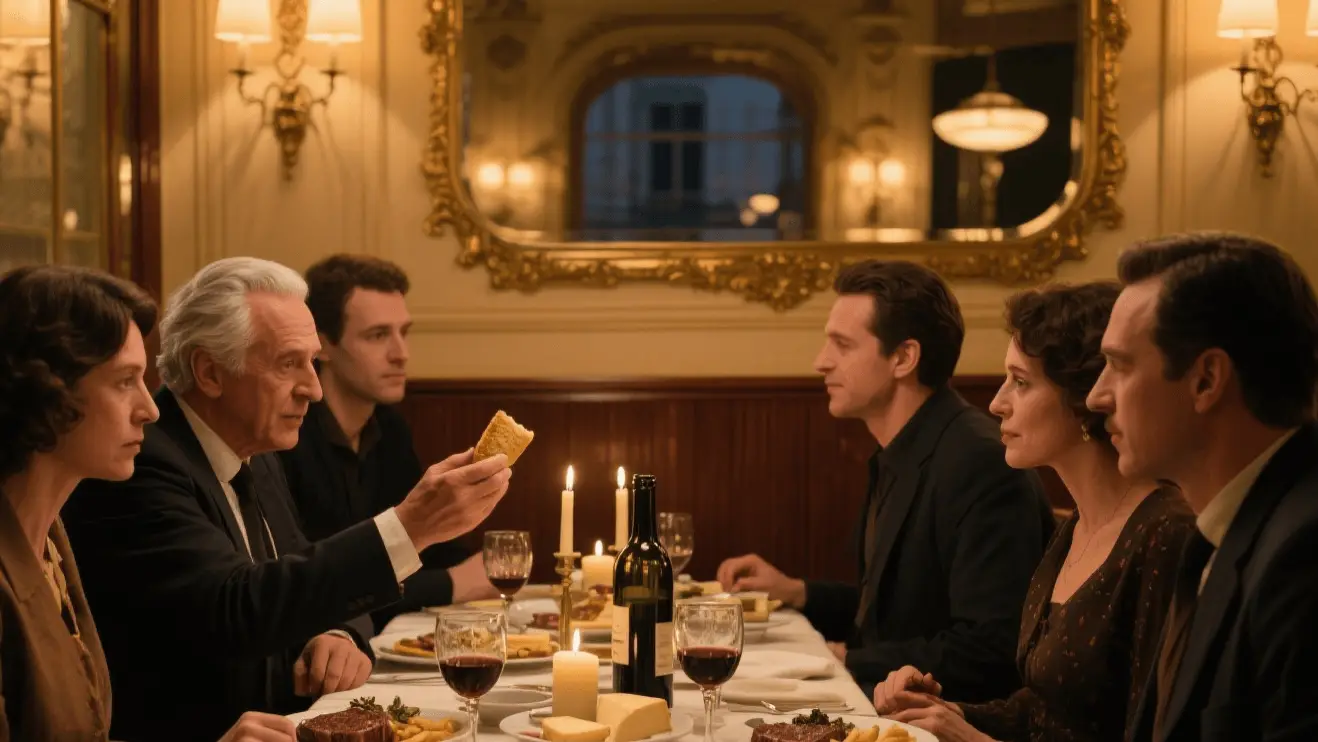
American group dining operates on principles of practicality and individual choice. Research from the National Restaurant Association (2023) shows 72% of American diners prefer separate checks when dining in groups, reflecting cultural values of autonomy and fairness. The typical American restaurant experience involves clearly defined meal courses (appetizer, main, dessert) served in quick succession, with the entire meal often completed within 60-90 minutes during weeknights. This efficiency-focused approach extends to service styles - 68% of casual American restaurants now utilize digital payment systems that automatically split bills, according to a 2023 Hospitality Technology report.
In contrast, French group dining follows what anthropologists call the "commensality principle" - the sacred act of sharing food as a social bonding experience. A 2023 Sorbonne University study found French group meals average 2 hours 15 minutes, with 89% of participants considering anything under 1.5 hours "rushed." The French Ministry of Culture's dining etiquette guide emphasizes that proper group dining involves synchronized eating pace, shared dishes (79% of French restaurants offer menu items specifically designed for sharing), and a single bill paid by the host in 83% of social dining situations.
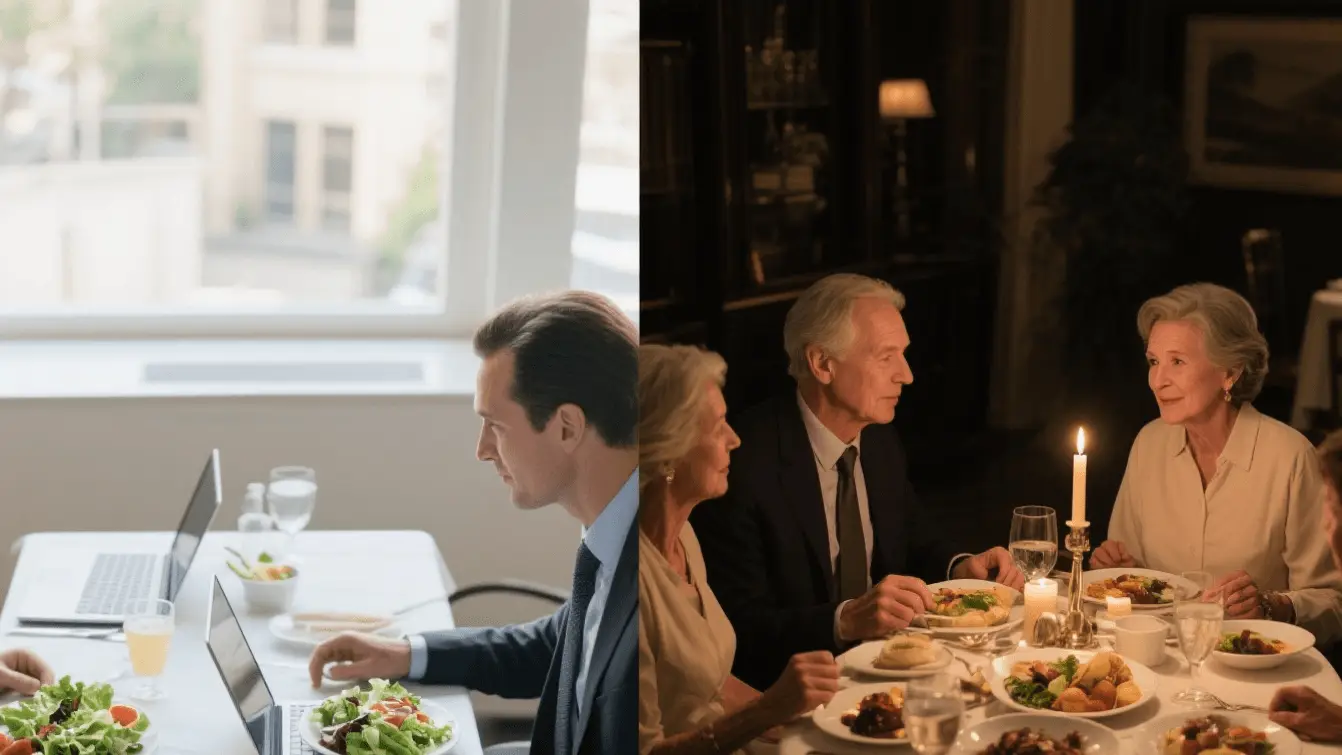
American business lunches famously operate on the "power lunch" model - a Cornell University study clocked average Manhattan business lunches at 42minutes. French business meals average 1 hour 48 minutes according to Paris Chamber of Commerce data. This dining customs comparison reveals fundamentally different approaches to time valuation - Americans view meals as time-bound events, while French culture sees them as relationship-building periods where time is fluid.
The European Social Survey found French group conversations feature 35% longer uninterrupted speaking turns compared to American dialogues. American table talk tends toward rapid topic changes (2.1 topics per minute) versus French preference for deeper exploration (0.8 topics per minute). These cultural differences dining patterns affect everything from business negotiations to social bonding.
French table manners follow strict codes - the Institut Français d'Etiquette reports 92%of French diners notice hand placement (should remain visible), while only 34% of Americans consider this important. Bread etiquette differs dramatically - 78% of French restaurants provide bread plates versus 22% of American establishments, according to Michelin Guide research. These subtle group restaurant etiquette US FR differences communicate respect levels.
American financial etiquette favors transparency - 81% of groups split checks evenly regardless of individual consumption (Zagat 2023). French custom dictates the host pays unless otherwise specified - only 12% of French social meals involve bill splitting (Le Figaro survey). Business meals follow different rules - 68% of French professionals split business meal bills versus 23% of social meals.
The US Department of Labor reports service staff derive 58% of income from tips, explaining the 15-20% standard. France's service compris system includes gratuity - the French Tourism Office notes only 43% of international visitors understand this dining customs comparison point, leading to frequent over-tipping.
Harvard Business Review's cross-cultural study found French seating arrangements follow status hierarchies in 87% of observed business meals, versus 32% in American settings. American "choose your seat" informality reflects different power distance norms in these cultural differences dining scenarios.
These US vs France group dining differences represent more than just etiquette variations - they're living expressions of cultural worldviews. Americans prioritize efficiency and equality; the French value relationship depth and social nuance. Savvy global citizens adapt their behavior accordingly - slowing down in France, respecting time constraints in America, and always observing the unspoken rules that turn shared meals into meaningful cultural exchanges.
【Disclaimer】The content regarding is for informational purposes only and does not constitute professional advice in any related field. Readers should make decisions based on their individual circumstances and consult qualified professionals when necessary. The author and publisher disclaim all responsibility for any consequences resulting from actions taken based on the information provided.
Claire Laurent
|
2025.09.04


